Sunday, March 17, 2019
Baby Boomer Apology Reprise
1954 Chamber of Commerce Propaganda
I grew up on this stuff. Our parents were every bit as crazy, beguiled, and foolish as we Boomers were.
Music, maestro:
Science Fiction by the Eddie Sauter Orchestra
On the Repercussions of Angelic Behavior...
...which is the title of a very fast, intense, musically and virtuosically very advanced music by Robert Fripp and associates circa 1999. Assuming the title was a quote from literature, probably esoterica like the writings of Gurdjieff, I goggled. (That means I put on eyeglasses, but yes, I used a search engine. It's where we keep our stuff these days.) No reference availed. But I stumbled on this:
https://www.ask-angels.com/spiritual-guidance/earth-angels/
It's the sort of thing people either embrace or sneer at. I do neither. I marvel at our modern times, when we devise and market ever new mirrors for self-understanding as we daily fracture into dust our original, God-given mirror: reality. The sky, the soil, the water, the myriad creatures, our fellow specie members...
...these days we have to convince ourselves we're magical beings just to explain why we feel tender sensitive emotions and experience insights that actually make logical sense of our experiences. We need special divine permission in order to feel what we actually and obviously are: mysterious magical beings with little clue of how we came to be here.
Some music from the album, for those who like that sort of thing (I do but on a spartan diet):
Strangers on a Train from The Repercussions of Angelic Behavior
And now, a few bazillion words from our sponsor, Earth Angel Girl!!!!!!!
Saturday, March 16, 2019
A Baby Boomer's Apology
This is an article by David Holmgren, one of the great granddaddies of the permaculture and general environmental awareness movement. I publish the entire text here because he wants it to be disseminated and so do I, but the original posting was on the excellent Automatic Earth produced by the very wise and caring Raúl Ilargi Meijer, who writes:
"In light of the children’s climate protests today, which I have yet to voice my qualms about (and I have a few), it only makes sense to put into words a baby boomer’s apology. To have that phrased by someone with the intellect and integrity of David should have everyone sit up and pay attention, if you ask me. And perhaps it would be good if more people would try and do the same: apologize to those kids.
"Here’s my formidable friend David Holmgren:"
David Holmgren: It is time for us baby boomers to honestly acknowledge what we did and didn’t do with the gifts given to us by our forebears and be clear about our legacy with which we have saddled the next and succeeding generations.
By ‘baby boomers’ I mean those of us born in the affluent nations of the western world between 1945 and 1965. In these countries, the majority of the population became middle class beneficiaries of mass affluence. I think of the high birth rate of those times as a product of collective optimism about the future, and the abundant and cheap resources to support growing families.
By many measures, the benefits of global industrial civilisation peaked in our youth, but for most middle class baby boomers of the affluent countries, the continuing experience of those benefits has tended to blind us to the constriction of opportunities faced by the next generations: unaffordable housing and land access, ecological overshoot and climate chaos amongst a host of other challenges.
I am a white middle class man born in 1955 in Australia, one of the richest nations of the ‘western world’ in the middle of the baby boom, so I consider myself well placed to articulate an apology on behalf of my generation.
In the life of a baby boomer born in 1950 and dying in 2025 (a premature death according to the expectations of our generation), the best half the world’s endowment of oil – the potent resource that made industrial civilisation possible – will have been burnt. This is tens of millions of years of stored sunlight from a special geological epoch of extraordinary biological productivity. Beyond our basic needs, we have been the recipients of manufactured wants and desires. To varying degrees, we have also suffered the innumerable downsides, addictions and alienations that have come with fossil-fuelled consumer capitalism.
It is also true that our generation has used the genie of fossil fuels to create wonders of technology, organisation and art, and a diversity of lifestyles and ideas. Some of the unintended consequences of our way of life, ranging from antibiotic resistance to bubble economics, should have been obvious, while others, such as the depression epidemic in rich countries, were harder to foresee. Our travel around the world has broadened our minds, but global tourism has contaminated the amazing diversity of nature and traditional cultures at an accelerating pace. We have the excuse that innovations always have pluses and minuses, but it seems we have got a larger share of the pluses and handballed more of the minuses to the world’s poorest countries and to our children and grandchildren.
We were the first generation to have the clear scientific evidence that emergent global civilisation was on an unsustainable path that would precipitate an unravelling of both nature and society through the 21st century. Although climate chaos was a less obvious outcome than the no-brainer of resource depletion, international recognition of the reality of climate change came way back in 1988, just as we were beginning to get our hands on the levers of power, and we have presided over decades of policies that have accelerated the problem.
Over the years since, the adverse outcomes have shifted from distant risks to lived realities. These impact hardest on the most vulnerable peoples of the world who have yet to taste the benefits of the carbon bonanza that has driven the accelerating climate catastrophe. For the failure to share those benefits globally and curb our own consumption we must be truly sorry.

David Holmgren
In the 1960s and 70s, during our coming of age, a significant proportion of us were critical of what was being passed down to us by our parent’s generation who were also the beneficiaries of the western world system, which some of us baby boomers recognised as a global empire. But our grandparents and parents had been shaped by the rigours and grief of the first global depression of the 1890s, the First World War, The Great Depression of the 1930s and, of course, the Second World War. Aside from those who served in Vietnam, we have cruised through life avoiding the worst threats of nuclear annihilation and economic depression, even as people in other countries suffered the consequences of superpower proxy wars, coups, and economic and environmental catastrophes.
While some of us were burnt by personal and global events, we have mostly led a charmed existence and had the privilege to question our upbringing and culture. We were the first generation in history to experience an extended adolescence of experimentation and privilege with little concern or responsibility for our future, our kin or our country.
Most baby boomers were raised in families where commuting was the norm for our fathers but a home-based lifestyle was still a role model we got from our mothers. In our enthusiasm for women to have equal access to productive work in the monetary economy, few of us noticed that without work to keep the household economy humming we lost much of our household autonomy to market forces. By our daily commutes, mostly alone in our cars, we entrenched this massively wasteful and destructive action as normal and inevitable.
As we came into our power in middle age, the new technology of the internet, workshop tool miniaturisation and other innovations provided more options to participate in the monetary economy without the need to commute, but our generation continued with this insane collective addiction. In Australia, we faithfully followed the American model of not investing in public transport, which moderated the adverse impacts of commuting in European and other countries not so structurally addicted to road transport. By failing to build decent public transport and the opportunities for home-based work, and wasting wealth in a frenzy of freeway building that has choked our cities, our generation has consumed our grandchildren’s inheritance of high quality transport fuels and accelerated the onset of climate chaos. For this we are truly sorry.
In pioneering the double income family, some of us set the pattern for the next generation’s habit of outsourcing the care of children at a young age, making commuting five days a week an early childhood experience. This has left the next generation unable to imagine a life that doesn’t involve leaving home each day.
These patterns are part of a larger crisis created by the double income, debt-laden households with close to 100% dependence on the monetary economy. Without robust and productive household economies, our children and grandchildren’s generations will become the victims of savage disruptions and downturns in the monetary economy. For failing to maintain and strengthen the threads of self-provision, frugality and self-reliance most of us inherited from our parents, we should be truly sorry.
Some of us felt in our hearts that we needed to create a different and better world. Some of us saw the writing on the walls of the world calling for global justice. Some of us read the evidence (mostly clearly in the 1972 Limits To Growth) that attempting to run continuous material growth on finite planet would end in more than tears.
Some of us even rejected the legacy of previous generations of radicals’ direct action against the problems of the world, and instead decided we would boldly create the world we wanted by living it each day. In doing so, we experienced hard-won lessons and even created some hopeful models for succeeding generations to improve on in more difficult conditions. That our efforts at novel solutions often created more sound than substance, or that we flitted from one issue to another rather than doing the hard yards necessary to pass on truly robust design solutions for a world of less, leaves some of us with regrets for which we might also feel the need to apologise.
These experiences are shared to some degree by a minority in all generations but there is significant evidence that the 1960s and 70s was a time when awareness of the need for change was stronger. Unfortunately, a sequence of titanic geopolitical struggles that few of us understand even today, a debt-fuelled version of consumer capitalism, and propaganda against both the Limits to Growth and the values of the counterculture, saw most of us following the neoliberal agenda like sheep into the 1980s and beyond.

After having played with the privilege of free tertiary education, most of us fell for the propaganda and sent our children off to accumulate debts and doubtful benefits in the corporatised businesses that universities became. We convinced our children they needed more specialised knowledge poured down their throats rather than using their best years to build the skills and resilience for the challenges our generation was bequeathing to them. For this we must be truly sorry.
Many of us have been the beneficiaries of buying real estate before the credit-fuelled final stages of casino capitalism made that option a recipe for debt slavery for our children. Without understanding its mechanics we have contributed to – and fuelled with our faith – a bubble economy on a vast scale that can only end in pain and suffering for the majority. While some of us are members of the bank of Mum and Dad, when the property bubble bursts we could find ourselves following the bank chiefs apologising for the debt burden we encouraged our children to take on. Some of us will also have to apologise for losing the family home when we went guarantor on their mortgages. For not heeding the warnings we got with the GFC, we will be truly sorry.
Some of us have used our windfall wealth from real estate and the stock market to do good works, including creating small models of more creative and lower footprint futures that have inspired the minority of the next generations who can also see the writing on the wall. But most of us used our houses as ATMs for new forms of consumption that were unimaginable to our parents, from holidays around the world to endless renovations and a constant flow of updated digital gadgets and virtual diversions. For this frivolous squandering of our windfall wealth we must be truly sorry.
While our parents’ generation experienced the risks of youth through adversity and war we used our privilege to tackle challenges of our own choosing. Although some of us had to struggle to free ourselves from the cloying cocoon of middle class upbringing, we were the generation that flew like the birds and hitchhiked around the country and the world. How strange that on becoming parents (many of us in middle age) we believed the propaganda that the world was too dangerous for our children to do the same around the local neighbourhood. Instead we coddled them, got into the chauffeuring business, and in doing so encouraged their disconnection from both nature and community. As we see our grandchildren’s generation raised in a way that makes them an even more handicapped generation, we must be truly sorry for the path we took and the dis-ease we created.
After so many of us experimented with mind-expanding plants and chemicals, some of us were taken down in chemical addictions, but it was dysfunctional and corrupt legal prohibitions more than the substances themselves that were to blame for the worst of the damage. So how strange that when in middle age we got our hands on the levers of power, most of our generation decided to continue to support the madness of prohibition. For this we must be truly sorry: to have seen the light but then continued to inflict this burden on our children and grandchildren. For having acquiesced in the global ‘war on drugs’ that spread pain and suffering to some of the poorest peoples of the world we should be ashamed.
When the ‘war on drugs’ (a war against substances!) became the model for the ‘war on terror’ (war against a concept!) some of us reawakened the anti-war activism of the Vietnam years but in the end we mostly acquiesced to an agenda of trashing international law, regime change, shock and awe, chaos, and the death of millions; all justified by the 9/11 demolition fireworks that killed a small fraction of the number of citizens that die each year as a result of our ongoing addiction to personal motorised mobility.
While the shadow cast by climate change darkens our grandchilden’s future, the shadow of potential nuclear winter that hung over our childhood as not gone away. Many of us were at the forefront of the international movement to rid the world of nuclear weapons and thought the collapse of the Soviet Union had saved us from that threat. Coming into our power after the end of the cold war, our greatest crime on this geopolitical front has perhaps been the tacit support of our generation for first, the economic rape of Russia in the 1990s, and then its progressive encirclement by the relentless expansion of NATO. In Australia we have meekly added our resources and youth to more or less endless wars in the Middle East and central Asia justified by the fake ‘war on terror’. For this weakness as accessories to global crimes wasting wealth and lives to consolidate the western powers’ control of the first truly global empire, we should hang our collective heads in shame.
While some of our generation’s intellectuals continued to critique the ‘war on terror’ as fake, the vast majority of the public intellectuals of our generation, including those on the left, have supported the rapid rise of Cold War 2.0 to contain Russia, China and any other country that doesn’t accept what we now call ‘the rules based international order’ (code for ‘our empire’). This is truly astonishing when looked at in the context of our lived history. Let us hope that sanity can prevail as our empire fades and future generations don’t brand us as the most insane, war-mongering generation of all time. For our complicity in this grand failure of resistance we should be truly sorry.

click to order David’s latest
On another equally titanic front, the mistake of giving legal personhood to corporations was not one that our generation made. However most of us have contributed our work, consumption and capital to assist these self-organising, profit-maximising, cost-minimising machines of capitalism morphing into emergent new life forms that threaten to consume both nature and humanity in an algorithmic drive for growth. At a time of our seniority and numbers, we failed to use the Global Financial Crisis as an opportunity to bring these emergent monsters to heel. Do our children have the capacity to tame the monsters that we nurtured from fragile infants to commanding masters?
And if they do find the will to withdraw their work, consumption and capital enough to contain the corporations, will the economy that currently provides for both needs and wants unravel completely? This is a burden so great most of us continue to believe we have no responsibility or agency in such a dark reality. We trust that history will not place the burden of responsibility on our generation alone. But for our part in this failure of agency over human affairs we apologise. Further, we should accept with grace the consequences for our own wellbeing.
Most of us feel impotent when thinking of these failures to control the excesses of our era, but on a more modest scale we have mindlessly participated in taking the goods and passing on the debt to future generations. No more so than in our habitual acceptance of antibiotics from doctors to fix the most mundane of illnesses. For our parents’ generation, antibiotics represented the peak of medical science’s ability to control what killed so many of their parents and earlier generations.
For us, they became routine tools to keep us on the job and our children not missing precious days at school. Through this banal practice we have unwittingly conspired with our doctors to rapidly breed resistance to the most effective and low-cost antibiotics. We took for granted that future generations would always be able to work out ways to keep ahead of diseases with an endless string of new antibiotics. For having squandered this gift we are truly sorry.
Further, despite the fact that some of us have became vegetarian or even vegan, our generation’s demand for cheap chicken and bacon has driven the industrial dosing of animals with antibiotics on a scale that has accelerated the development of antibiotic resistance far faster than would have been the case from us dosing ourselves and our children. For supporting this and other such obscene systems of animal husbandry we apologise to our grandchildren and succeeding generations and hope that somehow an accommodation between humanity, animals and microbes is still possible.
We experienced and benefited from the emergent culture of rights and recognition for women, minorities and the people of varied abilities, and many of us who fought to extend and deepen those rights have pride in what we did. However some of us are beginning to fear that in doing so we contributed to creating new demands, disabilities, and fractious subcultures of fear and angst unimagined in previous generations. While we might not be in the driving seat of identity politics and culture wars, we raised our children to demand their rights in a world that is unravelling due to its multiple contradictions.
In this emerging context, strident demands for rights are likely to be a waste of valuable energy that younger people might better focus on becoming useful to themselves and others. For overemphasising the demand for rights and underplaying the need for responsible self- and collective-reliance, perhaps we should also be sorry.
And is this escalating demand for rights by younger people itself connected, even peripherally, to the increasing callous disregard for the rights of others? Especially in the case of refugees, this careless disregard has allowed political elites to use tough treatment of the less fortunate to distract from the gradual loss of shared privilege that once characterised the ‘lucky country’. To the shame of those in power over the last two decades (mostly baby boomers) those policies are now being adopted on a larger scale in Europe and the US.

In our lifetimes religious faith has declined. For many of our generation, this change represents a measure of humanity’s progress from a benighted past to a promising future. But the collective belief in science and evidence-based decision making has now become a new faith, “Scientism”, which seeks to drive out all other ways of thinking and being from the public space. At the same time, religious fundamentalism is now resurgent. Is this too something that our generation unleashed by preaching tolerance while enforcing an ideology we didn’t even recognise as such?
A significant sign of the good intentions of our generation has been our recognition that the ancient war against nature, which has plagued human life since the beginnings of agriculture, and indeed civilisation, must end. One powerful expression of our efforts has been the valuing of the biodiversity of life, especially local indigenous biodiversity. In the ‘New Europes’ of North America and the Antipodes, seeking to save indigenous biodiversity has grown into an institutionalised form of atonement for the sins of the forefathers.
While this seems like one of our achievements, even this we have bastardised with a new war against naturalised biodiversity. Perhaps the worst aspect of this renewed war against novel ecologies is that we have accepted the helping hand of Monsanto in using Roundup as the main weapon in our urban and rural habitats. The mounting evidence that Roundup may be worse than DDT will be part of our legacy. While history may excuse our parent’s generation for naïve optimism in relation to DDT, our generation’s version of the war on nature will not save us from harsh judgement. For this we should be truly sorry.
Of course any public apology in this country invites comparisons to the apology by governments to the stolen generation of Australian indigenous peoples for the wrongs of the past. This unfinished sorry business is beyond the scope of this apology, but it is an opportunity to reflect critically on our common self-perception of supporting indigenous peoples’ rights in contrast to the normalised racism of previous generations.
Our generation’s invitation to, and enabling of, Australians of indigenous descent to more fully participate in mainstream Australian society may have been a necessary step towards reconciliation; or could it have been a poison chalice drawing them even deeper into the dysfunctions of industrial modernity that I have already outlined. We can only hope that people with such a history of resilience and understanding in the face dispossession will take these additional burdens in their stride.
In any case, this apology is not one that comes from a position of invulnerable privilege, giving succour to those who are no threat to that privilege. For many baby boomers, now caring for parents and dealing with their deaths, we are more inwardly focused. For some of us, especially those estranged from parents, through this both painful and tender processes we are finally growing up. But a comic tragedy could play out in our declining years if a combination of novel disabilities, the culture of rights and amplified fears lead to our children and grandchildren’s generations mostly experiencing harder times as far worse than they might really be, and deciding we are the cause of their troubles.
We baby boomers will increasingly find that in our growing dependence on young people we will be subject to their perspectives, whims and prejudices. Hopefully we can take what we are given on the chin and along with our children and our grandchildren’s generations we can all grow up and work together to face the future with whatever capacities we have.
We might hope this apology is itself a wake-up call to the younger generations that are still mostly sleepwalking into the oncoming maelstroms. In raising the alarm we might hope our humble apology will galvanise the potential in young people who are grasping the nettle of opportunities to turn problems into solutions.
We hope that this apology might lead to understanding rather than resentment of our frailty in the face of the self-organising forces of powerful change that have driven the climaxing of global industrial civilisation. Finally, the task ahead for our generation is to learn how to downsize and disown before we prepare to die, with grace, at a time of our choosing, and in a way that inspires and frees the next generations to chart a prosperous way down.
(End)
A song that captures in full the angsty ennui that today's younger ones feel so much as their inner deep wisdom voice waits for the other shoe to drop:
S.J.Boring -- Sunday Avenue
From the house next door, another example of modern introspective nostalgic escape into abstract vague emotionalism:
Liverpool Street in the Rain
Friday, March 15, 2019
Russian Reality versus American Absurdity
Today's post from the ever-wise Dmitry Orlov:
ClubOrlov March 14 2019

Opening paragraphs:
ClubOrlov March 14 2019

Opening paragraphs:
"In light of recent developments, a slight update is needed here. First,
Russia has demonstrated its latest weaponry, which is both cheap and effective
and largely neutralizes anything the US is able to throw at it. Most recently,
Putin announced the new Zirkon delivery system which flies at speeds above Mach
20 and cannot be intercepted by any means, either existing or imaginable. Putin
also announced that in case the US attacks Russia, Russia will counterattack
not just the launch sites but the sites where the decision to attack Russia
will be made. "Question is, can they [the Americans] do the math?" he
asked. The answer is no: all I've heard from the US since then has been
preposterous talk about a "new arms race." There is no recognition at
all that the arms race is over and that Russia won it. So I did the math
myself, and have discovered a very simple, obvious fact: if the US launches a
first strike against Russia, its leaders will not be around to find out whether
any of their missiles or bombs got through and reached their targets within
Russia; they will all be dead well before then. But there is no reason for
Americans to fear Russia, for Russia will not attack. Instead, they should fear
their own leaders, who may be insane and ignorant enough to attempt a
preemptive strike against Russia—and fail. What can Americans usefully do in
this situation? Unfortunately, there is but a single, very short answer:
repent—just in case their leaders do the suicidal thing, for if that happens
they won't get any warning."
For me, this is the definitive quote:
"And so, most of the recent American warmongering
toward Russia can be explained by the desire to find anyone but oneself to
blame for one’s unfolding demise."
Yes, the rest of the world is a foolish bunch of greedy goons for the most part. A crazy snake circus. But the USA, well, it is special. It thinks it is the Black Knight. Sadly, it is probably right:
The Great (Russian) Conspiracy
(There used to be a genuine R conspiracy: it was called the USSR. Its aim was to make the entire world Safe for Socialism in competition to its "loyal opposition", the USA, a conspiracy to make the world Safe for Democracy. The USSR died. It's dead. There is no more Russian conspiracy.)
We know how to successfully interfere with another nation's
elections. You need agents provocateur to stir up trouble, primarily via phony NGO's prominently featuring buzz words like Democracy, Freedom, Hope,
Liberation, etc. You needs mass rallies large enough to gain respectful
attention and garner growth traction. You need some sympathetic patsies in
government office high enough to give you an Official Voice. (Yes, I know I
spelled 'oaficial' wrong.)
If there really were a great Russian conspiracy to elect
Trump, it would be MSNBCFOX/NYTIMESWAPOST for giving a sociopathic narcissist named Donald Trump so much airtime. It
would be the DNC for shitting all over itself and its most qualified candidate
in favor of a sociopathic loser named Hillary Clinton.
News Flash: we elected Herr Donald, not some foreign conspiracy.
Here's the genuine Russian conspiracy, if conspiracy we must call it rather than what it is: sane foreign policy: to keep the USA from
destroying it, and if possible, help the USA collapse slowly enough that the
resulting economic tsunami doesn't take Russia down with us.
It's called sanity. Survival. But sane survival would surely
sound like a conspiracy to most Americans, taught from birth that USA is born
to reign over all.
Megalomania and sane survival do not much overlap.
Monday, January 21, 2019
Feel your anger... let it flow... goooddd...
Another glaring symptom of late-stage whatever-culture-this-is collapse:
To the woodchippers they go!
Why this shocks or surprises people is one of life's lumpy gravy mysteries.
Kinda makes me pine for the good old days of dunking witches... I forgot: did we do that before or after burning them alive?
Theme music:
Your City is Falling by IF
To the woodchippers they go!
Why this shocks or surprises people is one of life's lumpy gravy mysteries.
Kinda makes me pine for the good old days of dunking witches... I forgot: did we do that before or after burning them alive?
Theme music:
Your City is Falling by IF
"Through the power of the soul...
...anything is possible." Jimi Hendrix
Debt Rattle Martin Luther King Day 2019
"It’s time for all Americans, and not just Americans either, to find a nice bright mirror and face the beams in their own eyes. All sides focus on promoting hate of the others, and really, that is the opposite of what Dr. King said. How could you forget? You don’t solve anything be demanding other people change, you solve things only by changing yourself. You have no more right to hate Trump and his supporters than they have of hating you, or anyone else."
MLK: “a slogan ‘Power for Poor People’ would be much more appropriate than the slogan ‘Black Power.’”
Debt Rattle Martin Luther King Day 2019
"It’s time for all Americans, and not just Americans either, to find a nice bright mirror and face the beams in their own eyes. All sides focus on promoting hate of the others, and really, that is the opposite of what Dr. King said. How could you forget? You don’t solve anything be demanding other people change, you solve things only by changing yourself. You have no more right to hate Trump and his supporters than they have of hating you, or anyone else."
MLK: “a slogan ‘Power for Poor People’ would be much more appropriate than the slogan ‘Black Power.’”
(lest we forget that the man really knew how to dress for success)
(lest we forget the real reason he was assassinated: he was a powerful voice against a very profitable war against the innocent civilians of Viet Nam. To quote the lyrics of a Richard Thompson song* about the Summer of Love and the years that MLK and Bobby Kennedy were shot: "They were burning babies and burning flags, the hawks against the doves...")
Sunday, January 20, 2019
JJ sings what life is for me these days...
Every Minute
I tried so hard to be the person
Everybody thought I was
I pushed myself and everyone
Almost over the edge
This mirrored light that sends back
Everything that you send out
The grace you give
Given back
Lovin' every minute you live
Feels so good to be warm in the sun
Lovin' every minute of livin'
(It's) so good to be warm in the sun
Lovin' every minute of livin'
Evil deeds that we do
Screamin' from the headlines
Can't stop to read or to watch
Cause I ain't got the patience or time
To live a life of despair
To live by another mans word
It's always been in your hands
To live a life you want while you're here
Chorus
I don't care what you say to me
Everywhere beauty is all I see
And it don't make a damn
Cause there ain't nothing to take from me
I'm lovin' every minute
I'm lovin' every minute I'm free
I tried so hard to be the person
Everybody thought I was
I pushed myself and everyone
Almost over the edge
This mirrored light that sends back
Everything that you send out
The grace you give
Given back
Lovin' every minute you live
Feels so good to be warm in the sun
Lovin' every minute of livin'
(It's) so good to be warm in the sun
Lovin' every minute of livin'
Evil deeds that we do
Screamin' from the headlines
Can't stop to read or to watch
Cause I ain't got the patience or time
To live a life of despair
To live by another mans word
It's always been in your hands
To live a life you want while you're here
Chorus
I don't care what you say to me
Everywhere beauty is all I see
And it don't make a damn
Cause there ain't nothing to take from me
I'm lovin' every minute
I'm lovin' every minute I'm free
Somewhere Between...
Song:
With a hammer and nails and a fear of failure we are building a shed
Between here and heaven between the wait and the wedding for as long as we both shall be dead
To the world beyond the boys and the girls trying to keep us calm
We can practice our lines 'til we're deaf and blind to ourselves to each other
Where it's fall not winter spring not summer cool not cold
And it's warm not hot have we all forgotten that we're getting old
With an arrow and bow and some seeds left to sow we are staking our claim
On ground so fertile we forget who we've hurt along the way and reach out
For a strange hand to hold someone strong but not bold enough to tear down the wall
'Cause we aint lost enough to find the stars aren't crossed why align them why fall hard not soft
Into fall not winter spring not summer cool not cold
Where it's warm not hot have we all forgotten that we're getting old
And it's fall not winter spring not summer cool not cold
And it's warm not hot has everyone forgotten that we're getting old
And it's fall not winter spring not summer cool not cold
And it's warm not hot have we all forgotten that we're getting old
With a hammer and nails and a fear of failure we are building a shed
Between here and heaven between the wait and the wedding for as long as we both shall be dead
To the world beyond the boys and the girls trying to keep us calm
We can practice our lines 'til we're deaf and blind to ourselves to each other
Where it's fall not winter spring not summer cool not cold
And it's warm not hot have we all forgotten that we're getting old
With an arrow and bow and some seeds left to sow we are staking our claim
On ground so fertile we forget who we've hurt along the way and reach out
For a strange hand to hold someone strong but not bold enough to tear down the wall
'Cause we aint lost enough to find the stars aren't crossed why align them why fall hard not soft
Into fall not winter spring not summer cool not cold
Where it's warm not hot have we all forgotten that we're getting old
And it's fall not winter spring not summer cool not cold
And it's warm not hot has everyone forgotten that we're getting old
And it's fall not winter spring not summer cool not cold
And it's warm not hot have we all forgotten that we're getting old
Thursday, January 17, 2019
Flashing Back at a Leisurely Pace
A series of notable images:
100 historical snapshots
It was the most unique -- and devastating -- century in history.
Also, a pretty painting that reminds me of this area in snow, which rarely happens:
100 historical snapshots
It was the most unique -- and devastating -- century in history.
Also, a pretty painting that reminds me of this area in snow, which rarely happens:
Tuesday, January 15, 2019
The Book of Tea
A very great, mercifully brief work of spiritual literary art:
"Teaism is a cult founded on the adoration of the
beautiful among the sordid facts of everyday existence. It inculcates purity
and harmony, the mystery of mutual charity, the romanticism of the social
order. It is essentially a worship of the Imperfect, as it is a tender attempt
to accomplish something possible in this impossible thing we know as life." Kakuzo Okakura, The Book of Tea
The opening sentence of The Book of Tea says, "Tea began as a medicine and grew into a beverage."
Medicine is
an aesthetic, a moral, a science, an art, a faith: in short, magic. Tea is a magical beverage.
"Those who cannot feel the littleness of great things
in themselves are apt to overlook the greatness of little things in others."
Confucius probably said the same thing ages ago, but Okakura
says it so neatly here. He continues:
"The average Westerner, in his sleek complacency, will see in the tea ceremony but another instance of the thousand and one oddities which constitute the quaintness and childishness of the East to him. He was wont to regard Japan as barbarous while she indulged in the gentle arts of peace: he calls her civilized since she began to commit wholesale slaughter on Manchurian battlefields."
Ouch.
Kakuzo lived from 1862-1913, and reads like an Asian
predecessor of G.K.Chesterton: occasionally overwrought but otherwise
shrewdly enlightening. Consider this passage an example of shrewdly enlightening (and entertaining):
"Why not amuse yourselves at our expense? Asia returns the compliment. There would be further food for merriment if you were to know all that we have imagined and written about you. All the glamour of the perspective is there, all the unconscious homage of wonder, all the silent resentment of the new and undefined. You have been loaded with virtues too refined to be envied, and accused of crimes too picturesque to be condemned. Our writers in the past -- the wise men who knew -- informed us that you had bushy tails somewhere hidden in your garments, and often dined off a fricassee of newborn babes! Nay, we had something worse against you: we used to think you the most impracticable people on the earth, for you were said to preach what you never practiced."
'too picturesque to be condemned' is a revealing concept. We
admire evil, if sufficiently interesting or astounding, and sufficiently afar.
Consider this passage an example of occasionally overwrought:
"There is a subtle charm in the taste of tea which
makes it irresistible and capable of idealisation. Western humourists were not
slow to mingle the fragrance of their thought with its aroma. It has not the
arrogance of wine, the self-consciousness of coffee, nor the simpering
innocence of cocoa."
'simpering innocence of cocoa' is an example of metaphor overpowering its subject.
"Samuel Johnson draws his own portrait as 'a hardened
and shameless tea drinker, who for twenty years diluted his meals with only the
infusion of the fascinating plant; who with tea amused the evening, with tea
solaced the midnight, and with tea welcomed the morning.'"
Quoted here for the beauty of Johnson's writing and thought. 'solaced the moonlight' is an example of when the pathetic fallacy is perfect not pathetic.
"Charles Lamb, a professed devotee, sounded the true
note of Teaism when he wrote that the greatest pleasure he knew was to do a
good action by stealth, and to have it found out by accident. For Teaism is the
art of concealing beauty that you may discover it, of suggesting what you dare
not reveal. It is the noble secret of laughing at yourself, calmly yet
thoroughly, and is thus humour itself -- the smile of philosophy."
Discretion is the better part of valor, and a good deed is best done in a way that doesn't leave its beneficiary feeling burdened by a debt of gratitude. But who doesn't secretly wish to be found out?
And so forth. The book reads like jasmine blossoms, freshly picked, unfolding as they lie among dried green tea leaves: a rare aroma to be absorbed in humble tea, whose strength is to be mildly uplifting but not so high as to lose touch with the earth.
Closing this essay, I'll note this coincidence: yesterday I
visited a local espresso haunt. This being uptown Portland, the customers were fit, youngish, and generally
affluent, and the decor was earnestly chic with wood well-polished and tile colorfully
laid.
But the noise was obnoxiously invasive, a threshold above
the chattering background we usually find so invigorating. This noise was daunting;
and when the espresso machine squealed it was like an
airport runway when several jet airplanes are warming up their turbines. The
modern spirit of coffee has grown raucous rather than bracing, pretentious not
reflective. And I LIKE coffee. I generally start my day with a pot of coffee
before even considering questions like, 'Should I have coffee this morning?' I am as
addicted as a caffiend can be without stuttering.
While there, I read from Obadiah in the Old Testament the following (emphases
mine) and inked in my notebook the following excerpt:
"The arrogance of your hearts has deceived you, You who live in the clefts of the rock," (Obadiah speaks here of Petra, the ancient hidden city located in southern Jordan, properly known as Wadi Musa) "In the loftiness of your dwelling place, Who say in your heart, Who will bring me down to earth? 'Though you build high like an eagle, Though you set your nest among the stars, From there I will bring you down,' declared the Lord."
In The Book of Tea we read: "The stars lost their
nests, the moon wandered aimlessly among the wild chasms of the night."
Nests of stars, wild chasms... coincidences are, if nothing
else, merely coincidences. But if something more, so be it. In man's search for
hidden meanings, does it matter that I'd ordered a mocha, tempering the "self-consciousness
of coffee" with the "simpering innocence of cocoa"?
Kukuzo Okakura (Japanese names are so much fun to say), of
course, gets the last word: "Meanwhile, let us have a sip of tea. The
afternoon glow is brightening the bamboos, the fountains are bubbling with
delight, the soughing of the pines is heard in our kettle. Let us dream of
evanescence, and linger in the beautiful foolishness of things."
A song:
Monday, January 14, 2019
On the Beauty of Genius and the Genius of Beauty
The Fisherman, a song performed by Nerija.
I like everything about this video of live performed music:
the music, multil-layered and direct while subtly woven
the solos (so honestly played)
the physical beauty of the talented young women playing it
their outfits
the way saxophones fit so perfectly between a woman's breasts
the drummer's expressions, tied-back hair, and how quietly her head keeps the time
the trumpeter, especially
the magnificent tallness of the bassist and how her long hair shades that height while echoing the warm colors of her wooden contrabass
the apparent possibility that the guitarist might be a dude (probably not), which might explain why ?he's on the perimeter, nearly left out
and the title, which sounds sufficiently New Testamental to satisfy the corny old Xtian in me.
Add to this the lack of pretension women tend to bring to playing jazz compared to men, and the level of expertise and soul required for them to even be allowed to make a showing in what is still a man's world, and you have music that soothes, invigorates, pleases and prides more than maybe any ever.
Women get to watch good-looking dudes play good stuff all the time. But for a 60-plus years old hetero male, there's nothing like getting to see these strong young mares stand tall and deliver.
(click to enlarge, oh please do)
I like everything about this video of live performed music:
the music, multil-layered and direct while subtly woven
the solos (so honestly played)
the physical beauty of the talented young women playing it
their outfits
the way saxophones fit so perfectly between a woman's breasts
the drummer's expressions, tied-back hair, and how quietly her head keeps the time
the trumpeter, especially
the magnificent tallness of the bassist and how her long hair shades that height while echoing the warm colors of her wooden contrabass
the apparent possibility that the guitarist might be a dude (probably not), which might explain why ?he's on the perimeter, nearly left out
and the title, which sounds sufficiently New Testamental to satisfy the corny old Xtian in me.
Add to this the lack of pretension women tend to bring to playing jazz compared to men, and the level of expertise and soul required for them to even be allowed to make a showing in what is still a man's world, and you have music that soothes, invigorates, pleases and prides more than maybe any ever.
Women get to watch good-looking dudes play good stuff all the time. But for a 60-plus years old hetero male, there's nothing like getting to see these strong young mares stand tall and deliver.
Polish mayor stabbed in shocking on-stage attack dies in hospital
The story is one thing. Poland is, I'm told, a nation of extremes, and has its share of fascist leanings. So such things will happen more and more as the world goes crazy.
But I post the article for its picture (click to enlarge):
A crowd of souls recording the event with cellcams. No one rushing to anyone's defense or or to disarm the murderer. It's like we're merely tourists in some decadent virtual reality, not fellow inhabitants of an earnest or vital reality.
The story is one thing. Poland is, I'm told, a nation of extremes, and has its share of fascist leanings. So such things will happen more and more as the world goes crazy.
But I post the article for its picture (click to enlarge):
A crowd of souls recording the event with cellcams. No one rushing to anyone's defense or or to disarm the murderer. It's like we're merely tourists in some decadent virtual reality, not fellow inhabitants of an earnest or vital reality.
Resumption, Resurrection, Rescuscitation
"Speaking of taxes, the Tax Foundation
declared April 19th2018 as
Tax Freedom Day, that point when our too-obvious-to-hide tax obligations are
satisfied and we are now supposedly free to pay ourselves. That’s 109 days into
the year, or 29.9% of our gross earnings. But wait…there’s more; a lot more in fact."
If the above quote intrigues you, I recommend you click the
link below.
Saturday, January 12, 2019
Why Let the Rich & Powerful Make Fools of Us...
...when we can make fools of ourselves?
"Some believe that the USA is a superpower. They cite
GPD figures, military spending, the ability to coerce various US vassals to
accede to US/Israeli demands at the United Nations. They also point to its
ability to force other nations to abide by its unilateral sanctions even though
they are ineffective at best, generally counterproductive and tend to hurt US
allies. Are these not the hallmarks of true superpowerdom?
"Let us see... If the US were a superhero endowed with various superpowers, what would they be?"
Read the rest here:
Is the US Still a Superpower?
Robin sez:
All known superheroes are fictional beings grown into collective figments of our imagination. They and their superpowers ultimately depend on their power to suspend our disbelief: good writing, good illustration, special effects, sexy actors who look good in tight Spandex... ultimately, it seems the One True Unifying Superpower Ring To Bind Them All is the ability to blow infinite amounts of smoke up the ass including your own.
Superman changed the past by circling counterclockwise around the earth at faster-than-light speeds... the USA changes the past by spinning counterfactual (and anti-logical) bullshit faster than we can wipe it off the windshields and viewscreens of our preferred modalities: safe in our cars or glued to our cellphones if not the omnipresent TV screens that USA citizens seem to require to enjoy dinner or a few beers.
My answer:
Mandatory token musical tidbit, shared here as much for the epic stature of the guitarist's nose as for the lovely music he makes with his two confreres:
Väsen
Iss muh burfdeh
It is just about now exactly 63 years since they pulled me from my mother's womb after doing a last-minute emergency C-section that saved my life at first but then saved hers when they discovered rampant uterine cancer that would have shortly killed her.
Not exactly a Virgin Birth deity but something of a miracle child.
One wonders what miracle will accompany my departure from this realm?
A song:
Death of Superman
Not exactly a Virgin Birth deity but something of a miracle child.
One wonders what miracle will accompany my departure from this realm?
A song:
Death of Superman
Friday, January 11, 2019
Either a Little Too Smart or a Little Too Dumb
Q: "One of your books, The Glass
Teat, had on its back cover the words "AMERICA: CHANGE IT...OR LOSE
IT! Do you think we're losing it?"
A: "We lost it long ago. Look at our country, for Chrissake. We're nothing but purchasing machines for giant conglomerates. We're ruled by the tyranny of the stupid."
Foolkiller
Club Orlov
There are many smart writers on the web explaining mysterious yet vitally critical things to us. Some do it better than others. Among the better, Dimitry Orlov's Club Orlov is more best than not.
Here he explains in hilarious terms the true nature of the beast we face when addressing this thing called 'the economy': "That’s not just a game; that’s exactly how capitalism actually works, and if that doesn’t work for you (it doesn’t for most people) then that’s exactly how capitalism doesn’t work."
As posted here:
National Bankruptcy as a Board Game
To read the entire thing, you'll have to subscribe to his blog. I highly recommend it. It's cheap. Plus, you'll LOL.
Today's tune:
I Asked
In the 'uh-huh' rideout at the end, they skip a beat, dropping from 16 beats to 15 beats. As implied lyrics go, this is a svelte way of saying, 'You make my heart skip a beat.'
Here he explains in hilarious terms the true nature of the beast we face when addressing this thing called 'the economy': "That’s not just a game; that’s exactly how capitalism actually works, and if that doesn’t work for you (it doesn’t for most people) then that’s exactly how capitalism doesn’t work."
As posted here:
National Bankruptcy as a Board Game
To read the entire thing, you'll have to subscribe to his blog. I highly recommend it. It's cheap. Plus, you'll LOL.
Today's tune:
I Asked
In the 'uh-huh' rideout at the end, they skip a beat, dropping from 16 beats to 15 beats. As implied lyrics go, this is a svelte way of saying, 'You make my heart skip a beat.'
Friday, December 21, 2018
A Choice At Last!
"the same political rants you see on Facebook, but
they're well written. also half of these stories are satire. let your judgement
- and not your newsfeed - determine which half"
Behold Extra Newsfeed
extranewsfeed.com/
Sadly, it appears to be mostly used as an excuse to bash Trump. As if he'd invented USA national idiocy, when in truth, he merely exploited it. No, the poor bastard will never Make America Great Again, but neither is he doing anything to make things worse that hasn't already been done... except being smart enough not to piss off Russia too much.
Even Trump knows that playing golf is no fun in a bunker 300 feet underground.
Tuesday, December 18, 2018
I'd forgotten I have a blog.
Here's some Willie Watson doing an uncommonly effective arrangement of an old folk ballad:
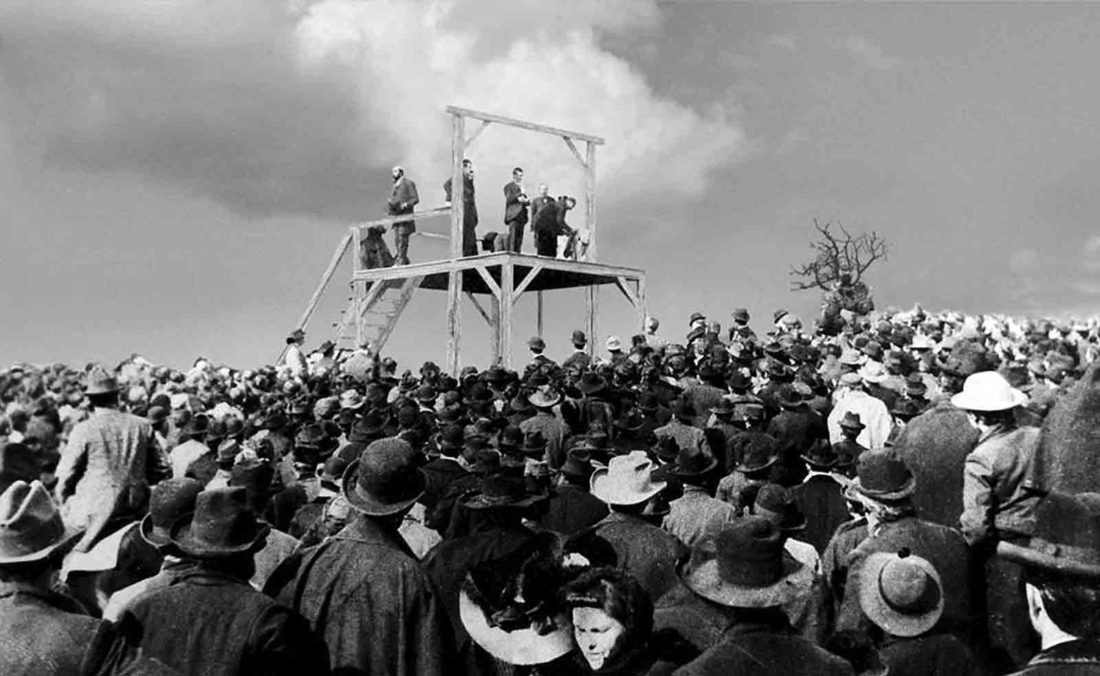
Gallows Pole:
Here's some Willie Watson doing an uncommonly effective arrangement of an old folk ballad:
Gallows Pole:
Saturday, March 8, 2014
You don't see this every day...
...unless you drive by 3rd and Howard everyday in downtown Spokane:
A song:
Ol' Glory
A demonstration of how the best musicians do their best live under the spotlight and its attendant pressure rather than the studio. The live version just kicks the studio version aside:
Ol' Glory in the studio
Wednesday, March 5, 2014
Three's an Awesome Horde!
Brace your ears for the opening late '60s muzak, which was as horrifyingly ubiquitous as legend proclaims, and it's a wonder we survived, and listen to the shared genius of three giants having a good old time:
Ellington, Smith, Taylor
Willie's puff of cigar smoke at :56 makes it realer than anythang.
Ellington, Smith, Taylor
Willie's puff of cigar smoke at :56 makes it realer than anythang.
Does this virtue make my halo look fat?
It's no sin for us to express our basic biological natures
and lavish affection on those with certain forms of physical appearance more than
others, but it is less virtuous than other values and actions that, as we age
and wrinkle, come to predominate our idea of what beauty is:
Does Anybody Love You?
"You're so lovely, so wise
You could make Venus crawl
But love between the ugly is the most beautiful love of all."
We are not obliged -- nor able, IMO -- to be saints, but the more we can attain those forms of love that love love above even the thing that is loved, the better we look in a cashmere halo, y'ask me.
This pale fire that flickers atop our biology, that doesn't just consume beauty but makes it, often out of much suffering, is best cherished as a soul even if it is only a shadow.
One reason that the worship of God can be so fulfilling is that doing so inspires us to be what we hope God is: a world-shaped mirror that reflects everything, including the evil we all do, with understanding and loving forgiveness.
Does Anybody Love You?
"You're so lovely, so wise
You could make Venus crawl
But love between the ugly is the most beautiful love of all."
We are not obliged -- nor able, IMO -- to be saints, but the more we can attain those forms of love that love love above even the thing that is loved, the better we look in a cashmere halo, y'ask me.
This pale fire that flickers atop our biology, that doesn't just consume beauty but makes it, often out of much suffering, is best cherished as a soul even if it is only a shadow.
One reason that the worship of God can be so fulfilling is that doing so inspires us to be what we hope God is: a world-shaped mirror that reflects everything, including the evil we all do, with understanding and loving forgiveness.
Tuesday, March 4, 2014
I'm not a number, I'm a bar code! What's your sign?
Someone wrote the following on a private forum I attend:
"In the future everyone will be implanted with a microchip at birth. It will include things like your IQ, your credit rating and your net worth. Also something new, called your "Gullibility Quotient". The used car salesman will know exactly who you are when you walk into the showroom."
My reply:
We fear such things because we cherish liberty as our primary means of self-preservation.
But we have increased our population immensely in a very short time, and the resulting body politic is basically a band of tumors fighting over the same blood supply.
So, as frightening as such universal identification schemes work, they are what is necessary if we are to continue being such a vast and powerful body politic.
Our bodies are totalitarian regimes in which each cell is typed for a specific job.
We wish not to be typed, we want free volition. But with so many of us living at once, accountability wants a scheme whereby we can be stamped.
This encroaching surveillance and identification is a symptom more than a cause.
Remember: one of the largest brain functions in humans is face recognition.
At some point, encroaching totalitarianism will make us individuals sufficiently uncomfortable as to demand a brain that actually cares about its body's constituent cells. We will cause it to feel our pain. Until then, our power structures will increasingly do with us as they will. Every day, they grow more powerful, using our efforts to become so. They make weapons and such that are denied to us. Imagine your body with claws that strike itself when the brain commands, injuring body parts that object to how the brains takes most of their blood sugar and oxygen.
Imagine this without neural pain feedback. The brain will bash the body to pieces if it so chooses until it destroys the body and thus itself.
This has ever been the logic of empire. We seem to be at an evolutionary impasse wherein this will no longer work.
To me, the question is: is reactionary pain feedback (rebellion, oppositional revolution, etc.) the better tactic? Or is the better tactic to build a different body with different "DNA", thereby starving the brain while creating cellular structures purposely designed to survive that brain death (collapse of empire)?
The clawed fists will not be able (barring fullblown nuclear winter and added WMD devastation) destroy all those radical cellular structures, and those that survive can network differently, coerced into doing so sanely and equitably by the extreme survival difficulties imposed by the wreckage caused by the old body.
As it stand, the populace is too easily lulled. It is not willing to send adequate pain feedback to the de facto psychopathic brain that literally has no compassion because it has no sense of feeling outside itself?
Meanwhile, since liberty is still our chief possession for self-betterment, here's an old-school howl.
"In the future everyone will be implanted with a microchip at birth. It will include things like your IQ, your credit rating and your net worth. Also something new, called your "Gullibility Quotient". The used car salesman will know exactly who you are when you walk into the showroom."
My reply:
We fear such things because we cherish liberty as our primary means of self-preservation.
But we have increased our population immensely in a very short time, and the resulting body politic is basically a band of tumors fighting over the same blood supply.
So, as frightening as such universal identification schemes work, they are what is necessary if we are to continue being such a vast and powerful body politic.
Our bodies are totalitarian regimes in which each cell is typed for a specific job.
We wish not to be typed, we want free volition. But with so many of us living at once, accountability wants a scheme whereby we can be stamped.
This encroaching surveillance and identification is a symptom more than a cause.
Remember: one of the largest brain functions in humans is face recognition.
At some point, encroaching totalitarianism will make us individuals sufficiently uncomfortable as to demand a brain that actually cares about its body's constituent cells. We will cause it to feel our pain. Until then, our power structures will increasingly do with us as they will. Every day, they grow more powerful, using our efforts to become so. They make weapons and such that are denied to us. Imagine your body with claws that strike itself when the brain commands, injuring body parts that object to how the brains takes most of their blood sugar and oxygen.
Imagine this without neural pain feedback. The brain will bash the body to pieces if it so chooses until it destroys the body and thus itself.
This has ever been the logic of empire. We seem to be at an evolutionary impasse wherein this will no longer work.
To me, the question is: is reactionary pain feedback (rebellion, oppositional revolution, etc.) the better tactic? Or is the better tactic to build a different body with different "DNA", thereby starving the brain while creating cellular structures purposely designed to survive that brain death (collapse of empire)?
The clawed fists will not be able (barring fullblown nuclear winter and added WMD devastation) destroy all those radical cellular structures, and those that survive can network differently, coerced into doing so sanely and equitably by the extreme survival difficulties imposed by the wreckage caused by the old body.
As it stand, the populace is too easily lulled. It is not willing to send adequate pain feedback to the de facto psychopathic brain that literally has no compassion because it has no sense of feeling outside itself?
Meanwhile, since liberty is still our chief possession for self-betterment, here's an old-school howl.
Today's personal writing tip
The purpose of telling is to show us things, and the purpose of showing is to tell us things.
R. Morrison
R. Morrison
Friday, February 28, 2014
What are the odds?
The role of miracles in reality cannot be overestimated. For
example, the riddle of primogenesis. Creationists belittle spontaneous primogenesis because "it would take a
miracle", and then replace said miracle with an even larger miracle, one
untold orders of magnitude greater than the minor miracle of complex molecules
stumbling into patters of replication and metablolism.
Thursday, February 27, 2014
Punishable by Life
"In Washington state, it (suicide) became legal in 2009, when a law modeled after the Oregon act, the Washington Death with Dignity Act was passed."
In No Particular Order nor Rhyme of Reason...
Most fantastically awesome. That very early Nashville sound
nailed the best sides of that stylistic divide. Plus: it's got 'ooh-ooh' girls.
If I were a rich man I'd have ooh-ooh girls to follow me around and ooh-ooh as
the spirit moved them:
The Golden Rocket
BTW, I just finished my third le Carre novel last night. I am now even more convinced that he is the greatest author of the latter 20th/early 21st century. He takes no shortcuts. His prose does everything any high-lit stylist's prose can do, and does it ever in service to the story not itself. His stories eschew plot gimmicks and instead dive to the bottom depth of his characters' hearts, and return with emotional pageantry that should humble even the likes of Cormac McCarthy.
Even though I'm stylistically drawn more to the terse elegancies of William Gibson and Paul Auster, I can't help feeling, when reading le Carre, that this is how the Lord wanted the Bible to be written.
When I examine a typical department store's book section and despair over all the glittering paperbacks in laundry detergent colors with cheesy embossed pompous titles, it is coming across a le Carre that gives me hope for the realm of modern best-selling fiction.
And I haven't even seen the legendary TV productions of his classic Smiley period, starring Alec Guinness, the one actor that Peter O'Toole could never overshadow when they shared a stage.
The Golden Rocket
BTW, I just finished my third le Carre novel last night. I am now even more convinced that he is the greatest author of the latter 20th/early 21st century. He takes no shortcuts. His prose does everything any high-lit stylist's prose can do, and does it ever in service to the story not itself. His stories eschew plot gimmicks and instead dive to the bottom depth of his characters' hearts, and return with emotional pageantry that should humble even the likes of Cormac McCarthy.
Even though I'm stylistically drawn more to the terse elegancies of William Gibson and Paul Auster, I can't help feeling, when reading le Carre, that this is how the Lord wanted the Bible to be written.
When I examine a typical department store's book section and despair over all the glittering paperbacks in laundry detergent colors with cheesy embossed pompous titles, it is coming across a le Carre that gives me hope for the realm of modern best-selling fiction.
And I haven't even seen the legendary TV productions of his classic Smiley period, starring Alec Guinness, the one actor that Peter O'Toole could never overshadow when they shared a stage.
Tuesday, February 25, 2014
Shining Through
'Use it. It's just energy.
You're just a shabby self-delusion. Shine a light through yourself and make new
shadow puppets.' Me, last night. I was on one of them philosophical rolls.
More or Less Translucent. (the actual song is titled 'Smiling Through')
Pie-in-the-Face Theology
'One benefit of religious belief is that it can provide a
productive focus for our many irrational biases, for the natural tendency
toward superstition, for magical thinking, that having such powerful
imagination gives us.
'It is better to aim ignorant superstition at God than at our real lives. God can handle it better than our lives can. God can take our most childish magical yearning (which is precious stuff) and perform miracles in us, keep one alive during times of suicidal despondency, give one a 'just because' reason for being happy and doing good that real life sometimes is unwilling or unable to provide.'
Robin Morrison
Just Another Man Hugs Tiger Tale
We are not entirely slaves of raw biological impulse. All
higher life forms are capable of great adaptation.
This means that we can do better. But 'we' doesn't exist. There is no 'we' except in statistical abstracts. There are only you and me, and only oneself can better oneself.
Sunday, February 23, 2014
On a Clear Day...
"There is a difference between a shaky or out-of-focus
photograph and a snapshot of clouds and fog banks."
—Erwin Schrödinger, Die gegenwärtige Situation in der
Quantenmechanik (The present situation in quantum mechanics),
Naturwissenschaften (translated by John D. Trimmer in Proceedings of the
American Philosophical Society)
Saturday, February 22, 2014
Canned dog food can be used for alien pod embryo expulsions and monster vocalizations
Pay attention. The following tricks probably couldn't save your life but you never know:
Common Foley tricks[edit]
Corn starch in a leather pouch makes the sound of snow
crunching[2]
A pair of gloves sounds like bird wings flapping[2]
An arrow or thin stick makes a whoosh[2]
An old chair makes a controllable creaking sound[2]
A water soaked rusty hinge when placed against different
surfaces makes a creaking sound. Different surfaces change the sound
considerably[2]
A heavy staple gun combined with other small metal sounds
make good gun noises[2]
A metal rake makes a fence sound[clarification needed] (it can also
make a metallic screech when dragged across a piece of metal)[2]
A heavy car door and fender can create most of the car
sounds needed but having a whole car in the studio is better[2]
Burning plastic garbage bags cut into strips makes a cool
sound when the bag melts and drips to the ground[2]
¼” audio tape balled up sounds like grass or brush when
walked on[2]
Gelatin and hand soap make squishing noises[2]
Frozen romaine lettuce makes bone or head injury noises[2]
Coconut shells cut in half and stuffed with padding makes
horse hoof noises;[2] this
is parodied in Monty Python and the Holy Grail
Cellophane creates crackling fire effects[2]
A selection of wooden and metal doors are needed to create
all sorts of door noises but also can be used for creaking boat sounds[2]
A heavy phone book makes body-punching sounds[2]
Acorns, small apples and walnuts on wooden parquet surface
can be used for bones breaking
Canned dog food can be used for alien pod embryo expulsions
and monster vocalizations[8]
Subscribe to:
Comments (Atom)